
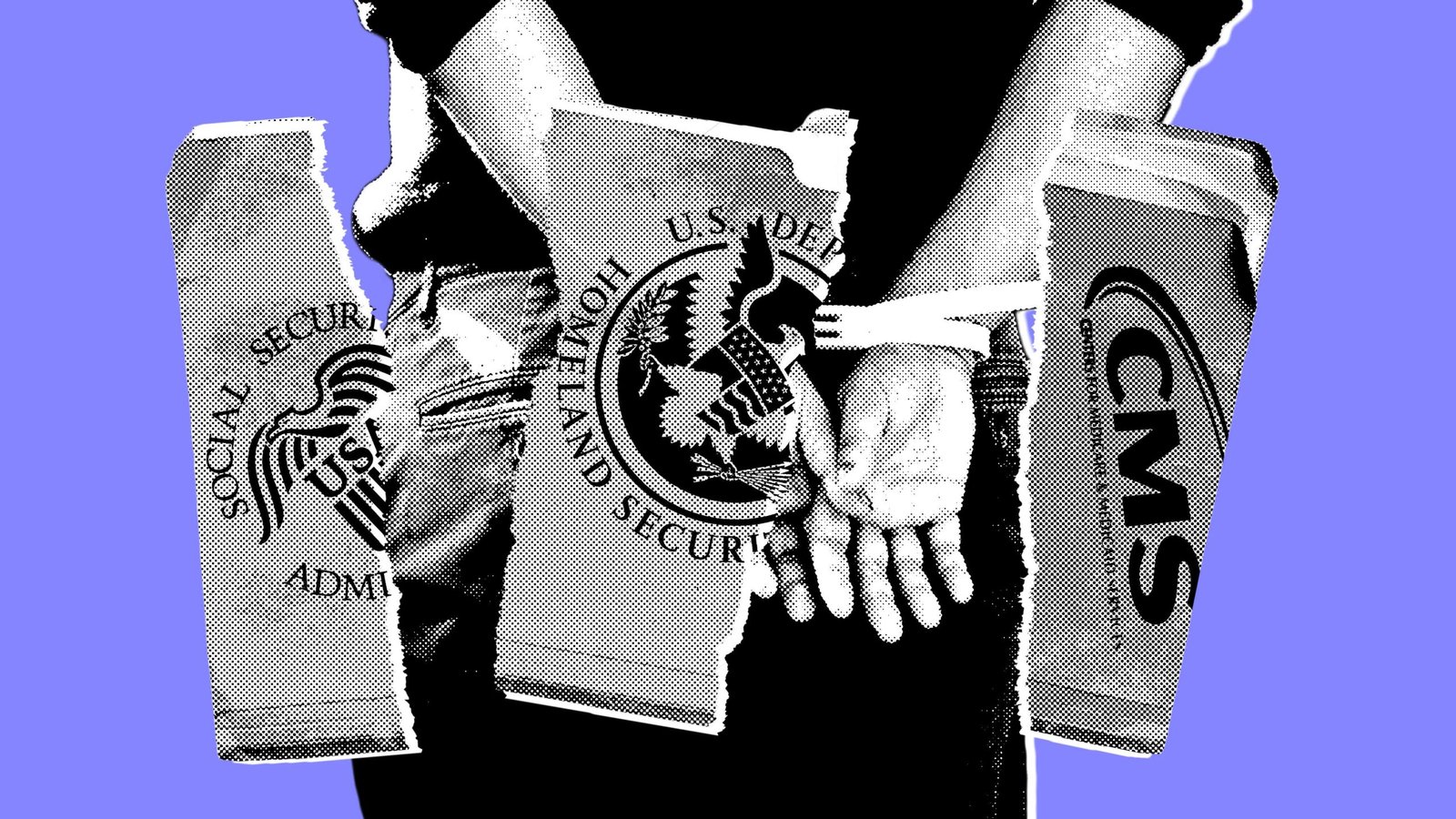
Alabama resident and U.S. citizen Leonardo Garcia Venegas is suing the federal government after immigration authorities twice ignored his legal identification and detained him, exposing the systemic failures of a rapidly expanding federal data-sharing network. The lawsuit highlights a growing trend where aggressive inter-agency surveillance protocols, intended for immigration enforcement, are increasingly ensnaring American citizens in high-stakes legal battles.
The Ordeal of Leonardo Garcia Venegas: A Citizen in Handcuffs
In May, immigration authorities forcibly detained Garcia Venegas at a construction site in Alabama. Despite presenting his Alabama REAL ID and declaring his citizenship, officers tackled him and held him handcuffed in a vehicle under the intense heat for over an hour. A nearly identical incident occurred less than a month later at another worksite. According to court filings, an officer dismissed his valid identification as “fake.”
Jared McClain, senior attorney at the Institute for Justice, suggests these incidents are a byproduct of an enforcement system driven by quotas. “If you fit the demographic profile they are targeting, authorities view your time in custody as a necessary cost of the system,” McClain stated. While DHS assistant secretary for public affairs Tricia McLaughlin dismissed allegations of racial profiling as “reckless and false,” the frequency of such cases tells a different story. Reporting from ProPublica indicates that at least 170 U.S. citizens were detained by immigration authorities in the first nine months of 2025 alone.
The Systematic Expansion of Federal Data Harvesting
The Department of Homeland Security (DHS) has accelerated the integration of data from various federal agencies to track and surveil individuals. This initiative, which began intensifying in early 2024, utilizes System of Records Notices (SORNs) to bypass traditional privacy barriers. In October, a SORN officially updated the Systematic Alien Verification for Entitlements (SAVE) database to include voter registration and verification data.
The surveillance web has expanded further through agreements with other major agencies:
- Social Security Administration (SSA): A recent SORN officially permits the SSA to share sensitive data with DHS for enforcement purposes, a move that drew over 10,000 public comments, many citing extreme safety concerns.
- Centers for Medicare & Medicaid Services (CMS): Just before Thanksgiving, CMS agreed to share citizenship status, location data, and phone numbers with DHS and ICE.
While the Department of Health and Human Services maintains that these agreements do not apply to U.S. citizens or lawful permanent residents, legal experts warn that the technical reality of data management makes such distinctions difficult to maintain.
The “Data Mismatch” Trap for Naturalized Citizens
The primary risk of this consolidated surveillance is the reliance on outdated or inaccurate information. Nikhel Sus, deputy chief counsel at Citizens for Responsibility and Ethics in Washington (CREW), notes that data collected for one purpose—such as social security benefits—is often flawed when applied to immigration enforcement. Naturalized citizens are particularly vulnerable; a person’s Social Security number remains the same from the time they were a non-citizen resident, and federal databases often fail to reflect their updated status as citizens.
“I applied for an SSN in 2001 as a lawful permanent resident,” one plaintiff represented by CREW stated in a court declaration. “Currently, my data stored with SSA, and therefore the information pooled by DHS, incorrectly describes me as a non-citizen.” There is currently no streamlined administrative process for citizens to “clear” their records or prevent DHS from targeting them based on these legacy errors.
Erosion of Due Process and Rapid Removal
Legal advocates argue that even when technology works as intended, officers may ignore it in favor of aggressive enforcement. One declaration in the Garcia Venegas suit describes an instance where an officer allegedly disregarded confirmed legal paperwork because the previous administration “made a lot of mistakes.”
The danger of these data mishaps extends beyond wrongful detention. Jennifer Ibañez Whitlock, senior policy counsel at the National Immigration Law Center, warns that the speed of modern enforcement can lead to citizens being processed for removal before they can secure legal representation. As federal agencies continue to merge their databases, the window for correcting administrative errors narrows, leaving citizens at the mercy of a system that prioritizes enforcement speed over factual accuracy.