Millions of Americans are leveraging decentralized digital tools—ranging from AI-driven fascism trackers to encrypted messaging—to orchestrate a massive grassroots resistance against the second Trump administration, bypassing traditional political structures to stage unprecedented nationwide protests. This surge in high-tech activism, epitomized by the “No Kings” movement, marks a significant tactical shift from the centralized demonstrations of 2017 to a fragmented, tech-heavy insurgency.
From AI Trackers to Thermal Printers: The Tech-Led Pushback
The resistance began in the shadows of “MAGA country” with individuals like Jack and Fiona (pseudonyms), who turned to technology to quantify perceived threats. Utilizing Realtime Fascism, an AI tool that scans the web for extremist indicators, the couple identified a “critical” threat level in early 2025. Their response was a blend of low-tech physical presence and high-tech distribution: they launched “Stick It to Fascists,” using a $100 thermal printer and QR codes to distribute over 750,000 stickers across all 50 states.
This initiative is not an outlier. Across the United States, small local cells are employing a sophisticated suite of online tools to mobilize while shielding themselves from potential federal retaliation. These groups rely on encrypted platforms like Signal and Matrix for sensitive communications, while utilizing Reddit and Bluesky to broadcast their message to the masses.
Decentralized Power: Why the New Resistance Shuns Top-Down Control
Unlike the Women’s March of Trump’s first term, the current opposition is intentionally leaderless. Dana Fisher, a sociology professor at American University and author of American Resistance, identifies this as a “moment of tactical innovation.” The movement has evolved from a top-down hierarchy into a resilient, decentralized network capable of rapid, localized mobilization.
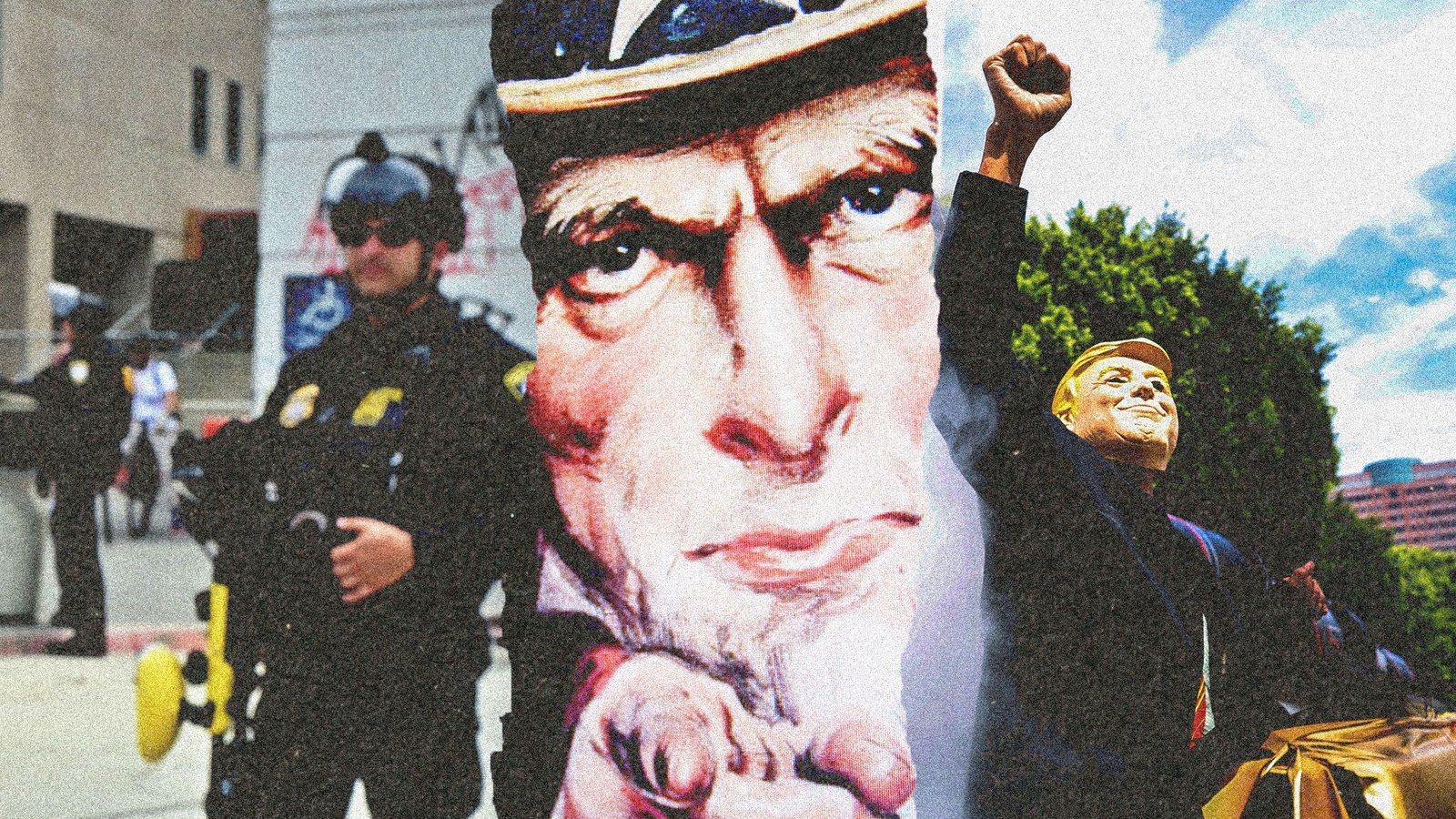
Data from the Crowd Counting Consortium corroborates this shift. In early 2025, street protests occurred at twice the frequency of February 2017. This momentum culminated in the “No Kings” protest on April 5, which reportedly drew 5 million participants across 2,100 events. Notably, these protesters avoided Washington, D.C.—where Trump held a military parade—choosing instead to demonstrate in their own communities.
The Rise of the 50501 Movement
Much of this coordination stems from a single subreddit: 50501 (representing 50 protests, 50 states, 1 movement). Sydney Wilson, a first-time organizer from Pittsburgh, discovered the group via a viral flyer. Within days of its inception on January 25, the subreddit amassed hundreds of thousands of subscribers, moving from digital discourse to organizing 80-city protests in less than two weeks.
The movement’s infrastructure is a patchwork of modern productivity tools:
- Discord: Used for real-time planning and volunteer assignment.
- Mobilize.us: A hub for sharing protest logistics.
- Google Docs: Collaborative spaces for drafting chants and sign designs.
- Signal/Matrix: Encrypted channels for high-security coordination.
Frustration with the Democratic Establishment
A driving force behind this grassroots surge is a deep-seated disillusionment with the Democratic Party. Organizers interviewed by WIRED expressed that the formal opposition has failed to present a coherent strategy against the dismantling of government agencies by the Department of Government Efficiency (DOGE). During Trump’s address to Congress, Discord channels were flooded with vitriol—not just for the President, but for Democrats who opted for symbolic gestures, such as wearing pink blouses, rather than aggressive political confrontation.
Internal Friction and the Battle for 50501
The decentralized nature of the movement has not made it immune to conflict. In April, the founder of the 50501 subreddit, known as “Evolved Fungi,” shuttered the community amid allegations of trademark disputes and internal power struggles. Despite this leadership vacuum and claims of doxing, the movement did not fracture; instead, it successfully transitioned to organizing the massive “No Kings” demonstrations in June.
Beyond street protests, the digital resistance includes specialized trackers. One platform monitors the administration’s alignment with Project 2025 goals, while another, “Spotlight on DOGE,” utilizes a network of lawyers and doctors to fact-check government claims regarding budget savings.
Real-World Stakes: From Subreddits to the Streets
While digital tools provide the framework, veteran activists warn that online engagement must translate into sustained physical presence to effect change. Sam Goldman, host of the Refuse Fascism podcast, argues that the movement requires “Arab Spring” levels of persistence—staying in the streets until demands are met.
The tension reached a boiling point recently in Los Angeles. When the National Guard and Marines were deployed for deportation raids—over the objections of local officials—the resistance moved from Discord servers to the pavement, signaling that despite the risks of “tactical innovation,” the movement’s digital roots have firmly planted themselves in physical reality.