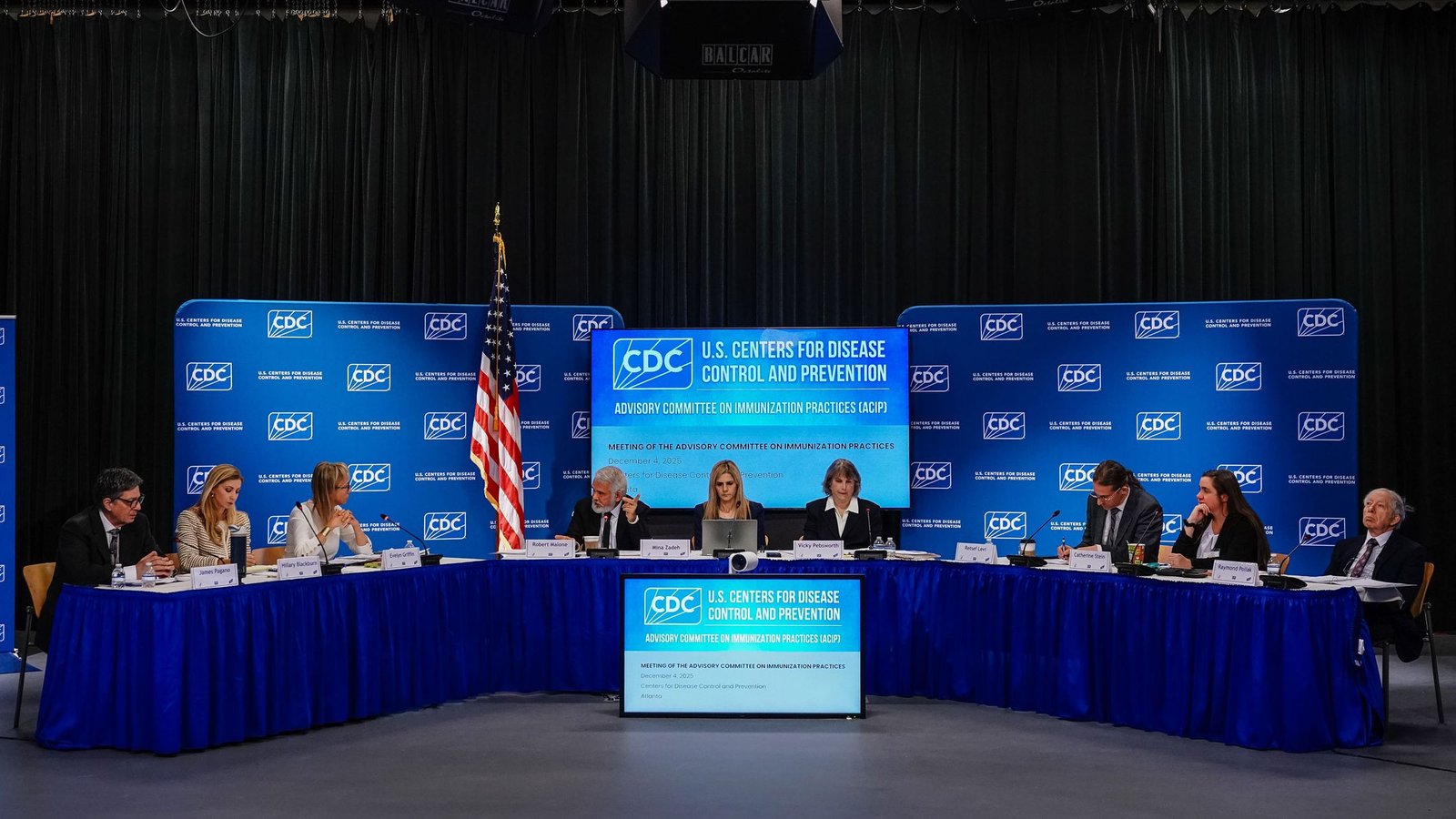
A growing coalition of Democratic-led states has officially rejected new federal guidelines regarding hepatitis B vaccinations, vowing to maintain universal birth-dose protocols despite a controversial policy shift from the Department of Health and Human Services (HHS). The defiance follows a decision by the Centers for Disease Control and Prevention’s (CDC) Advisory Committee on Immunization Practices (ACIP)—recently overhauled by HHS Secretary Robert F. Kennedy Jr.—to abandon a 30-year medical precedent that recommended the vaccine for all newborns within 24 hours of birth.
Federal Overhaul Sparks Public Health Crisis Concerns
The policy shift occurred after Secretary Kennedy executed what he termed a “clean sweep” of the ACIP in June, replacing all 17 veteran experts with new members, including several prominent vaccine skeptics. During a recent two-day session, this newly formed committee voted to limit the birth-dose recommendation exclusively to infants born to parents who test positive for the virus or whose status is unknown. For all other newborns, the panel now suggests “individual-based decision-making,” effectively encouraging parents to delay the first dose until the child is at least two months old.
Medical professionals characterize the meeting as chaotic and fueled by misinformation. Hepatitis B remains an incurable infection capable of causing permanent liver damage and fatal cancer. Statistics show that without immediate vaccination, approximately 90 percent of infants infected at delivery develop chronic infections, with one in four of those children eventually dying prematurely from the disease.
The Scientific Success of Universal Vaccination
Since 1991, the universal birth dose has been the gold standard for the American Academy of Pediatrics and the CDC. “The United States tried screening mothers and only vaccinating high-risk babies, and those strategies failed,” explains Michaela Jackson, director of prevention policy at the Hepatitis B Foundation. Jackson notes that the universal approach is the primary reason childhood hepatitis B cases have plummeted by 99 percent over the last three decades.
Experts warn that relying on maternal screening is a dangerous gamble, as U.S. screening systems are imperfect and roughly half of infected individuals are unaware of their status. John Ward, former director of the CDC’s Division of Viral Hepatitis, emphasizes that the federal reversal is a step backward. “Any transmission of this virus from mother to child that comes about because of this ACIP recommendation is an unnecessary harm for this country to bear,” Ward stated.
Blue State Alliances Mobilize Against CDC Guidance
In response to the federal policy change, the Northeast Public Health Collaborative and the West Coast Health Alliance have mobilized to preserve existing standards. The Northeast group—comprising Connecticut, Delaware, Maine, Maryland, Massachusetts, New Jersey, New York, Pennsylvania, Rhode Island, and Vermont—reiterated that all newborns should receive the vaccine within 24 hours. They further recommend that infants born to hepatitis B-positive parents receive the dose within 12 hours.
On the Pacific front, the West Coast Health Alliance—representing California, Oregon, Washington, and Hawaii—issued a joint statement strongly supporting the continued routine offering of the vaccine to all newborns. These states argue that state-level autonomy is now essential to protect residents from what they view as politically motivated changes to established medical science.
State-Specific Protections and Insurance Guarantees
Individual states are also implementing legislative and administrative safeguards:
- New York: The State Department of Health confirmed that ACIP’s vote will not alter its evidence-based recommendations for immediate newborn vaccination.
- Maryland: Health officials issued a standing order to ensure vaccine access for all residents up to age 18, regardless of the new federal stance.
- Pennsylvania: Governor Josh Shapiro signed an executive order to protect access to evidence-based vaccines, while the state’s insurance commissioner guaranteed that insurers will continue to cover the birth dose.
- Illinois & Colorado: Both states recently passed laws to enshrine vaccine access and maintain state-level structures for medical recommendations independent of federal shifts.
Quantifying the Risk: A Potential Surge in Childhood Deaths
The divergence between federal guidance and state policy is expected to create a fragmented public health landscape. A data analysis by researchers at Oregon Health and Science University predicts dire consequences if the birth-dose delay is adopted nationwide. The study estimates that the change could lead to more than 1,400 new hepatitis B infections among children in the first year alone.
Long-term projections are even more grim, suggesting the policy shift could result in 304 cases of liver cancer and 482 preventable deaths among the affected cohort. As Michigan, New Mexico, and Minnesota join the list of states defying the CDC, the battle over immunization policy is shifting from federal agencies to state capitals and local pediatric offices.