Sean Aaron Smith, a 27-year-old Texas man, executed a prolific domestic terrorism campaign by incinerating 22 cellular towers across San Antonio between 2021 and 2022, driven by radicalized delusions that 5G technology served as a “globalist” tool for human zombification. Smith’s transition from an apolitical citizen to a high-frequency arsonist highlights a burgeoning national security crisis: the rapid radicalization of lone actors through digital echo chambers and fringe disinformation.
The Digital Rabbit Hole: From Podcasts to Paranoia
The catalyst for Smith’s descent began in March 2020. As the pandemic shuttered his workplace and forced him into isolation, Smith filled his hours with high-potency drug use and algorithmic scrolling. A pivotal moment occurred when he encountered a clip from The Joe Rogan Experience featuring Eddie Bravo, where the host expressed “terror” regarding 5G technology and questioned the lack of long-term government testing. This sparked a memory of a former prison associate who had ranted about a nefarious electronic “grid.”
Propelled by these digital seeds, Smith’s social media feeds quickly pivoted to extreme content. He began consuming videos from InfoWars’ Alex Jones and David Icke, who alleged that 5G radiation interacted with graphene oxide in Covid-19 vaccines to enable mass mind control. When platforms began flagging or removing these posts for misinformation, Smith interpreted the censorship as a confirmation of a massive cover-up. He became convinced that America was mirroring a technocratic dystopia where personal freedoms were being systematically deleted.
A Clandestine Campaign Against Critical Infrastructure
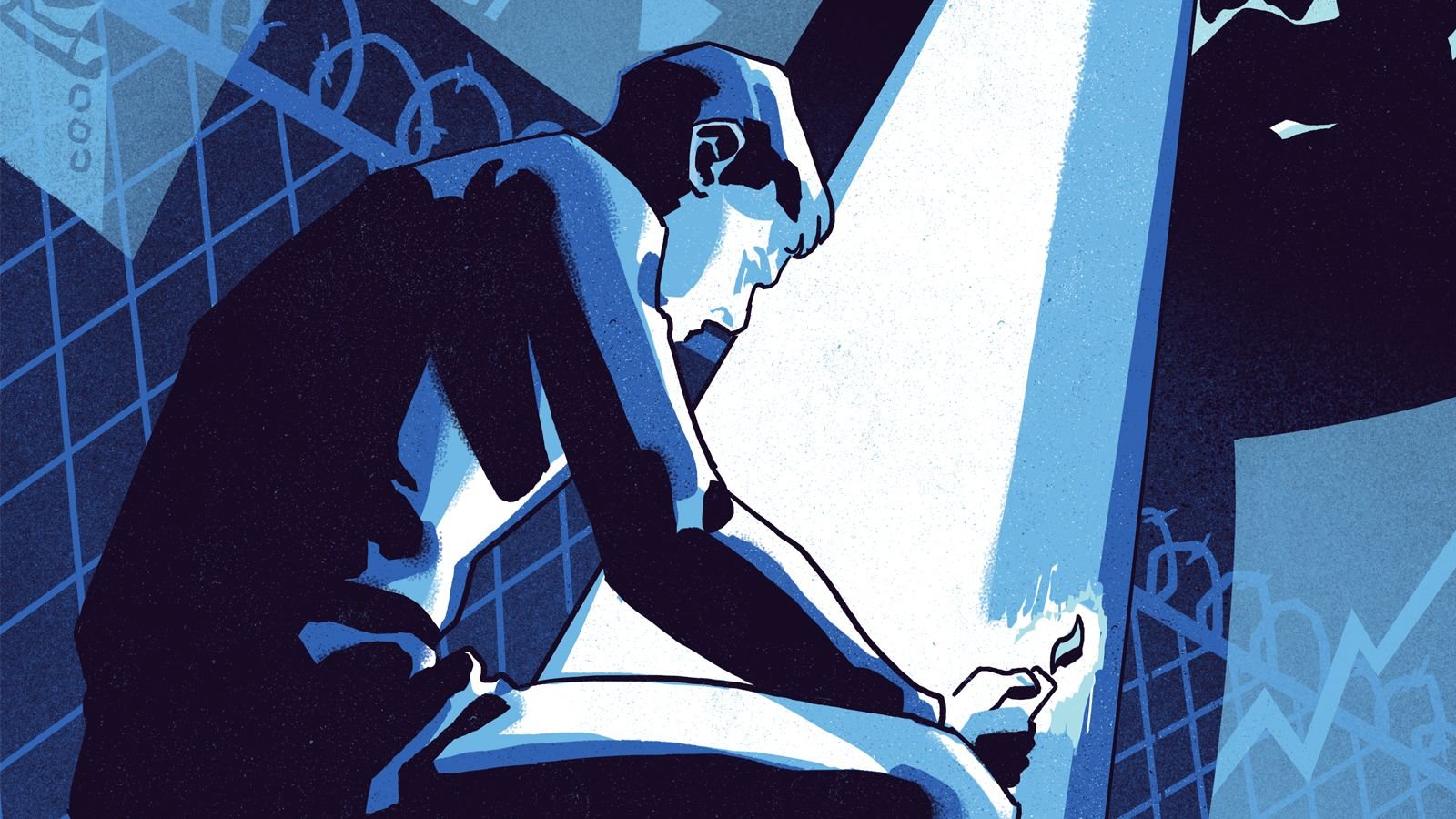
In late 2020, Smith transitioned from passive consumption to active reconnaissance. His first physical encounter with a 5G tower in a San Antonio suburb left him unsettled by its electrical hum, which he perceived as “sinister waves of energy.” This experience solidified his resolve to dismantle the infrastructure he believed was enslaving humanity. Smith studied the tactics of previous extremists, such as John Robert Patterson in Australia and Anthony Quinn Warner, the Nashville Christmas Day bomber, viewing their actions as blueprints for resistance.
Smith developed a sophisticated and calculated modus operandi to evade detection:
- Aerial Reconnaissance: He used Google Earth to identify targets located near wooded areas for easy escape.
- Tactical Disguises: He utilized construction and security guard uniforms to blend into tower perimeters.
- Evolved Incendiaries: After accidentally burning his own face with a gasoline-based Molotov cocktail, he switched to diesel-soaked rubber tires for a slower, more controlled burn.
By the spring of 2022, Smith had successfully torched nearly 20 towers, often cutting through razor-wire fences with bolt cutters and stuffing cable hatches with accelerants. Despite his girlfriend’s pleas to stop, Smith claimed the arsons gave his life “meaning” and a sense of purpose in “fighting against something.”
Forensics and the Digital Dragnet
The investigation, led by San Antonio Fire Department investigator Moncada, gained momentum as a pattern emerged. Federal authorities, including the ATF and FBI, recognized the attacks as part of a rising trend of conspiracy-driven terrorism predicted in a 2020 Department of Homeland Security memo. The breakthrough came from physical evidence left at various crime scenes: a lime-green lighter bearing Smith’s fingerprints and a discarded glove and boxer shorts containing his DNA.
The “invincible” arsonist finally faltered on April 29, 2022. Smith deviated from his cautious routine by targeting a tower near a high-traffic Walmart. Security footage captured a red Chevrolet Cruze fleeing the scene, which investigators traced to Callie Holland, a woman Smith was dating. Upon her detention, Holland provided the crucial piece of evidence: Smith’s current phone number. In a poetic irony, federal agents used the very cellular towers Smith reviled to “ping” his location, triangulating him to an apartment complex where he was eventually apprehended by a phalanx of law enforcement.
Justice and the Evolution of Radicalization
In federal court, prosecutors argued for a harsh sentence, emphasizing that the “22-tower arson spree” targeted critical infrastructure to promote a bizarre anti-government philosophy. Although facing up to 15 years, Smith was sentenced to 78 months in federal prison, to be served concurrently with state charges. Today, Smith remains incarcerated, claiming to be drug-free and spending his time studying chemistry and philosophy.
However, Smith’s radicalization has not ended; it has merely shifted focus. He now views Artificial Intelligence (AI) as the next existential threat, echoing a growing sentiment among modern extremists who fear technological surveillance. Despite expressing regret for the legal consequences of his actions, Smith’s commitment to his cause remains visible: he recently acquired a large tattoo on his leg depicting a 5G tower engulfed in flames—a permanent monument to his campaign of sabotage.