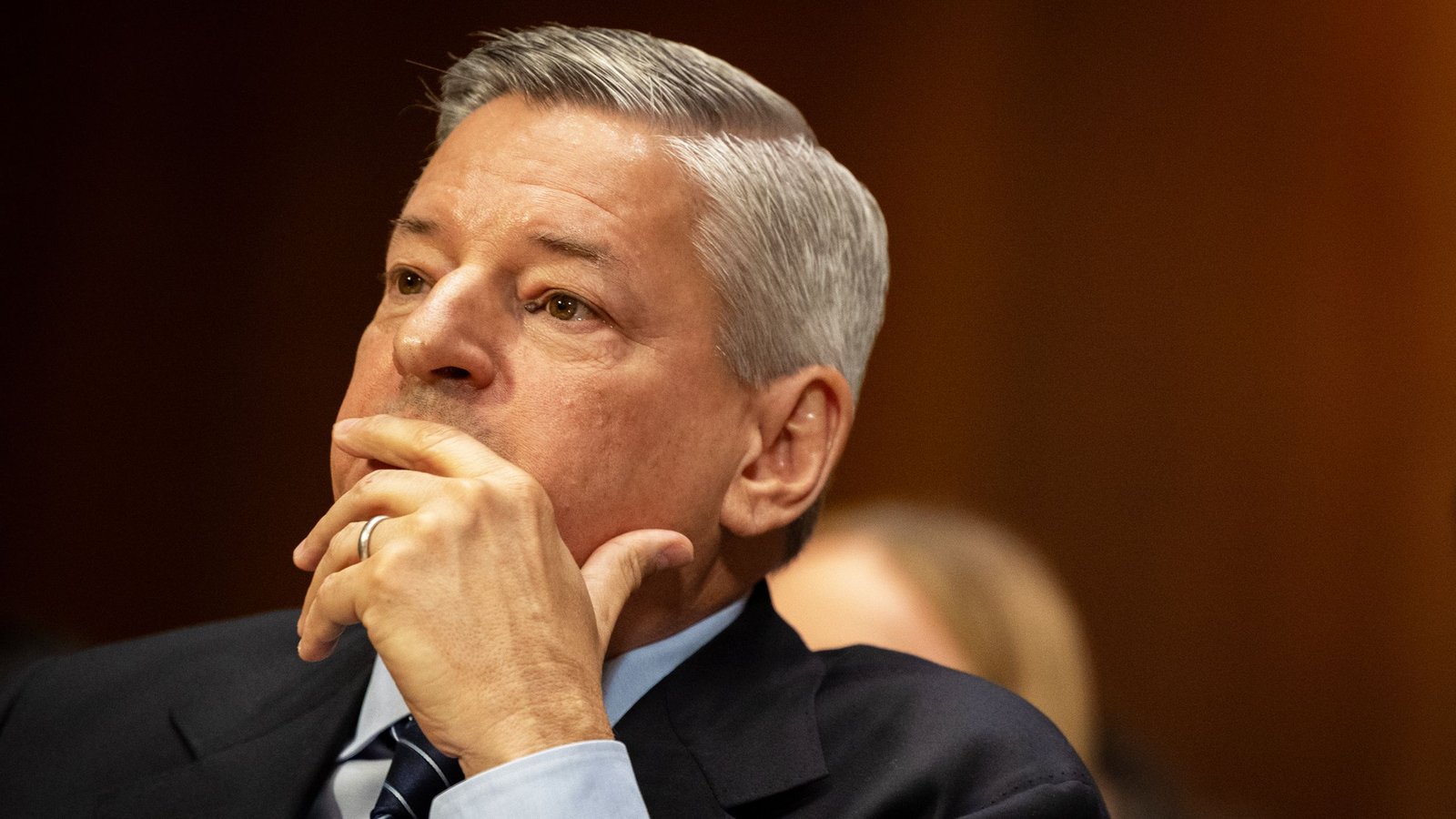
Netflix co-CEO Ted Sarandos testified before a US Senate subcommittee on Tuesday, defending the streaming giant’s proposed multi-billion dollar acquisition of Warner Bros. Discovery assets by arguing that the merger would enhance consumer value despite growing concerns over market consolidation. Speaking to the Senate Judiciary Committee’s Subcommittee on Antitrust, Competition Policy, and Consumer Rights, Sarandos addressed fears that a combined Netflix-HBO entity would stifle competition and drive up subscription costs in an already strained streaming landscape.
The ‘One-Click’ Defense Against Rising Subscription Costs
During the hearing, titled “Examining the Competitive Impact of the Proposed Netflix-Warner Brothers Transaction,” Senator Amy Klobuchar (D-MN) questioned how Netflix could guarantee affordability following a merger. The inquiry follows a January 2025 price hike that Netflix implemented despite record subscriber growth. Sarandos countered by emphasizing the ease of termination as a natural check on corporate overreach.
“We are a one-click cancel, so if the consumer says, ‘That’s too much for what I’m getting,’ they can cancel with one click,” Sarandos stated. He maintained that previous price increases reflected a proportional rise in content value and asserted that the company is currently collaborating with the US Department of Justice to establish potential guardrails against future predatory pricing.
Quantifying Value: Netflix vs. The Streaming Market
To justify the acquisition, Sarandos presented internal metrics suggesting that Netflix provides superior cost-efficiency compared to its rivals. He claimed that Netflix subscribers currently pay an average of 35 cents per hour of content viewed. In contrast, he cited Paramount+ at 90 cents per hour—a figure closely aligned with data from research firm MoffettNathanson, which recently valued Netflix’s consumption at 34 cents per hour versus 76 cents for Paramount+.
The executive argued that the merger would unify “complementary” services, noting that 80 percent of HBO Max subscribers already pay for Netflix. By combining libraries, Sarandos insists the deal would provide “more content for less,” rather than creating a dangerous monopoly.
Market Dominance and the YouTube Factor
Addressing concerns from Subcommittee Chair Mike Lee (R-UT) regarding the acquisition of Warner Bros. film studios, Sarandos pivoted the conversation toward Big Tech. He identified Google, Apple, and Amazon as the primary threats to the television industry, labeling them “deep-pocketed tech companies” attempting to monopolize the sector.
To downplay Netflix’s market share, Sarandos cited Nielsen’s “The Gauge” tracker from December, which revealed that YouTube accounts for 12.7 percent of total US TV viewership. Netflix currently holds 9 percent. Even after a successful merger with HBO Max, Sarandos projects the combined entity would control only 21 percent of the streaming market, a figure he suggests remains competitive in the face of YouTube’s dominance.
A $72 Billion Battle for Warner Bros. Assets
The acquisition remains a high-stakes corporate tug-of-war. Netflix recently restructured its $72 billion bid into an all-cash offer, aiming to secure HBO Max and the historic Warner Bros. film studios at an enterprise value of $82.7 billion. However, Paramount is pursuing a hostile takeover, offering a significantly higher $108.4 billion for the entirety of Warner Bros. Discovery, including its linear cable channels. Paramount has also initiated litigation against Warner Bros. to block the Netflix agreement, signaling a prolonged legal and regulatory battle for the future of Hollywood’s most iconic assets.