Grammy-winner Bad Bunny redefined the Super Bowl halftime show on Sunday, turning Santa Clara’s Levi’s Stadium into a massive tribute to Puerto Rico despite strict NFL logistical constraints and a polarized political climate. The performance, meticulously engineered by production powerhouse Tribe Inc., bypassed traditional set-building limitations to deliver a high-energy cultural statement to over 100 million viewers worldwide.
Engineering a Tropical Oasis on Natural Grass
The primary challenge for producers Bruce and Shelley Rodgers involved fulfilling the artist’s vision of recreating his hometown of Vega Baja without violating the NFL’s rigid field protection protocols. Unlike stadiums with synthetic turf, Levi’s Stadium utilizes natural grass, which limits the number of heavy equipment carts allowed on the playing surface to prevent structural damage.
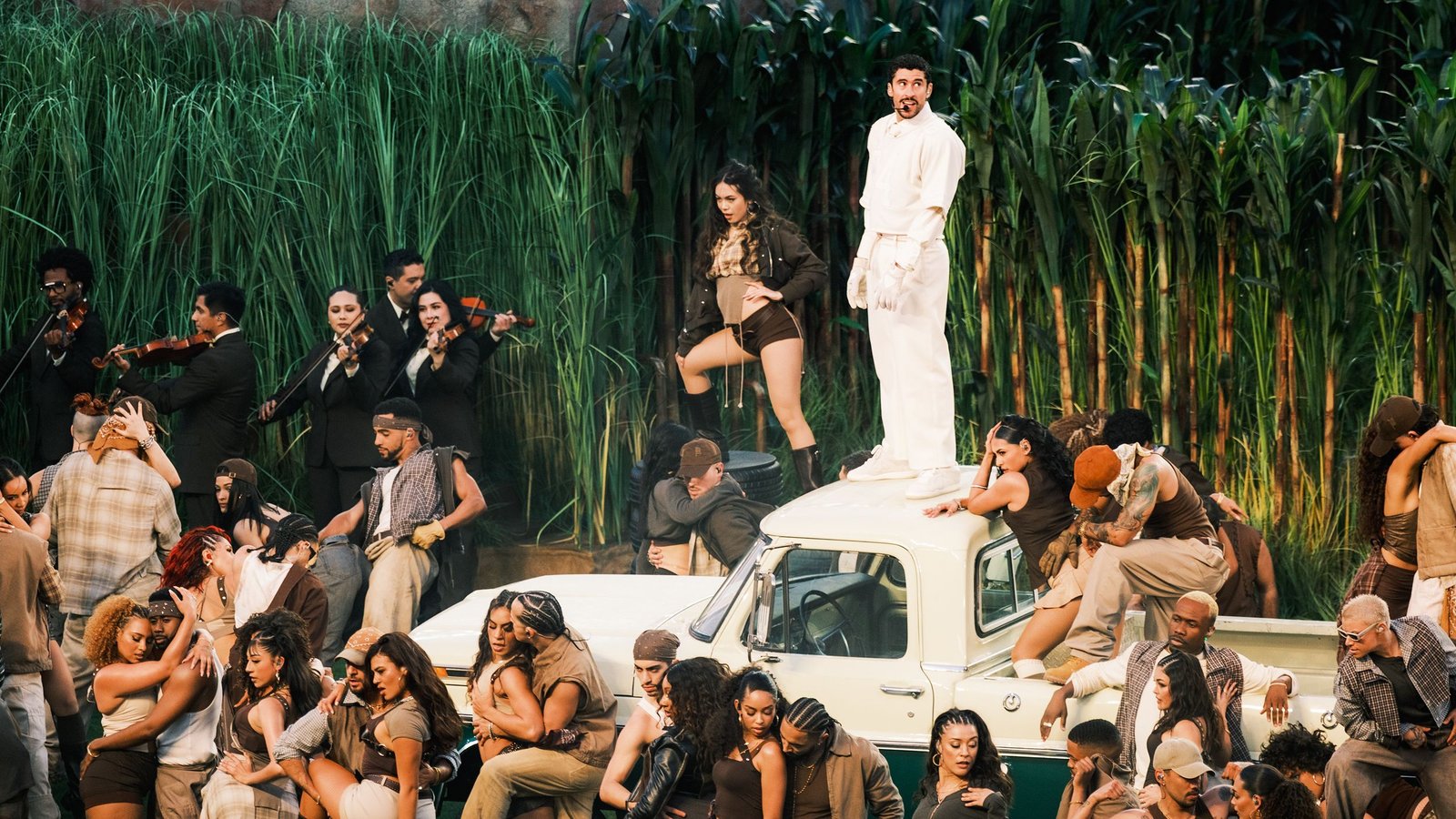
To circumvent the 25-cart limit—already exhausted by stages and technical props—Bruce Rodgers implemented a creative workaround: “human plants.” Instead of rolling out hundreds of physical trees, the production team deployed 380 performers dressed in elaborate costumes designed to mimic tall stalks of grass and tropical flora. This “living” landscape allowed Bad Bunny to navigate a set featuring a traditional casita, a vintage truck, and a wedding stage, all while maintaining the integrity of the 49ers’ home field.
A Masterclass in High-Stakes Logistics
Unlike the 2025 show in New Orleans, where Kendrick Lamar utilized the darkness of the Caesars Superdome for dramatic lighting, Bad Bunny’s set took place in full daylight. Art director Shelley Rodgers, an Emmy winner for her work with Rihanna and Dr. Dre, noted that the open-air venue stripped away traditional theatricality, forcing the team to rely on vibrant colors and massive scale to command attention.
The technical complexity extended to the pyrotechnics. Effects consultant Bob Ross orchestrated the largest fiery arsenal in two decades of halftime history, deploying 9,852 individual theatrical units. The display culminated in massive Puerto Rican flags illuminating the sky, designed to serve as a high-energy “exclamation mark” to the performance.
A Star-Studded Celebration of Latin Identity
The setlist featured a relentless string of hits, including “NUEVAYoL” and “Monaco,” punctuated by high-profile cameos. Pedro Pascal, Cardi B, and Karol G appeared at the casita, while Lady Gaga surprised the audience for a performance of “Die With a Smile” during a scripted wedding scene. The nuptials featured a real couple, fulfilling the artist’s long-standing desire to oversee a fan’s wedding on a global stage.
The finale carried a heavy symbolic weight. Bad Bunny crossed the end zone followed by a parade of flags representing the Americas. As the music faded, the screen displayed a singular message: “The only thing more powerful than hate is love.”
Navigating Political Turbulence and ICE Tensions
The performance arrived amid significant social friction. Following the NFL’s September announcement of Bad Bunny as the headliner, conservative influencers and political figures criticized the choice, citing the artist’s Spanish-language discography. The tension escalated with comments from Homeland Security advisers regarding potential border patrol scrutiny at the event, though California Governor Gavin Newsom later assured the public that no immigration enforcement actions were tied to the game.
Bad Bunny, who recently made history by winning the Grammy for Album of the Year with an all-Spanish record, addressed these tensions during his acceptance speech earlier in the week, stating, “We are not savage; we are not animals; we are not aliens. We are humans and we are Americans.”
Production Under Pressure: A Race Against Time
Beyond the political noise, the production team faced an unusually compressed timeline. While halftime concepts typically receive approval by Thanksgiving, the Bad Bunny project wasn’t finalized until the New Year. This delay stemmed from intense negotiations between the artist’s ambitious botanical vision and the logistical realities of the stadium.
Nick Pappas, the NFL’s field director, characterized the final footprint—encompassing carts, stages, and hundreds of costumed extras—as potentially the largest in the league’s history. Despite the backlash from certain political sectors and social media confusion over his “Ocasio” jersey (which represents the artist’s legal surname, Martínez Ocasio), the NFL stood by the production. League officials emphasized the artist’s global reach and the commercial necessity of appealing to an international audience.