Traced back to a 1540 challenge on a frozen Scottish lake, curling has evolved from a crude medieval pastime into a high-precision Olympic discipline that captivates millions of modern viewers. What began as a contest between a monk and an abbot’s representative in Paisley, Scotland, now represents a multi-billion dollar broadcast staple of the Winter Games, blending historical tradition with cutting-edge physics.
The Medieval Origins of the Roaring Game
The first written evidence of curling appears in the Latin records of John McQuhin, a notary who documented a 16th-century match between John Sclater and Gavin Hamilton. While the victor remains unknown to history, the practice of sliding stones across frozen bodies of water quickly became a cultural cornerstone in Northern Europe. This “roaring game”—named for the distinct acoustic resonance of stones gliding over ice—flourished during the exceptionally harsh winters that gripped Scotland over four centuries ago.
By the mid-1500s, the sport had already permeated the public consciousness, appearing in the 1565 and 1566 works of Flemish painter Pieter Bruegel the Elder. However, the term “curling” did not officially enter the lexicon until 1620, when poet Henry Adamson used the word to describe the curved trajectory, or “curl,” of the stones.
The Birth of Professional Standards and Global Migration
Formalization began in earnest in 1716 with the establishment of the Kilsyth Curling Club, an organization that remains active today. By 1838, the Royal Caledonian Curling Club established the first standardized ruleset, providing a blueprint for the International Olympic Committee and the modern World Curling Federation based in Perth, Scotland.
The sport’s global footprint expanded through the Scottish diaspora. Immigrants carried their passion for the ice to North America, establishing a massive stronghold in Canada, which remains the sport’s most dominant demographic hub. This migration turned a regional Scottish hobby into an international competitive phenomenon.
From Boulders to Precision Engineering
Early curlers utilized natural, flattened boulders pulled directly from the earth. These primitive stones lacked handles and uniform weight, often featuring simple finger holes similar to bowling balls. In this era, victory relied more on favorable ice conditions and luck than technical mastery.
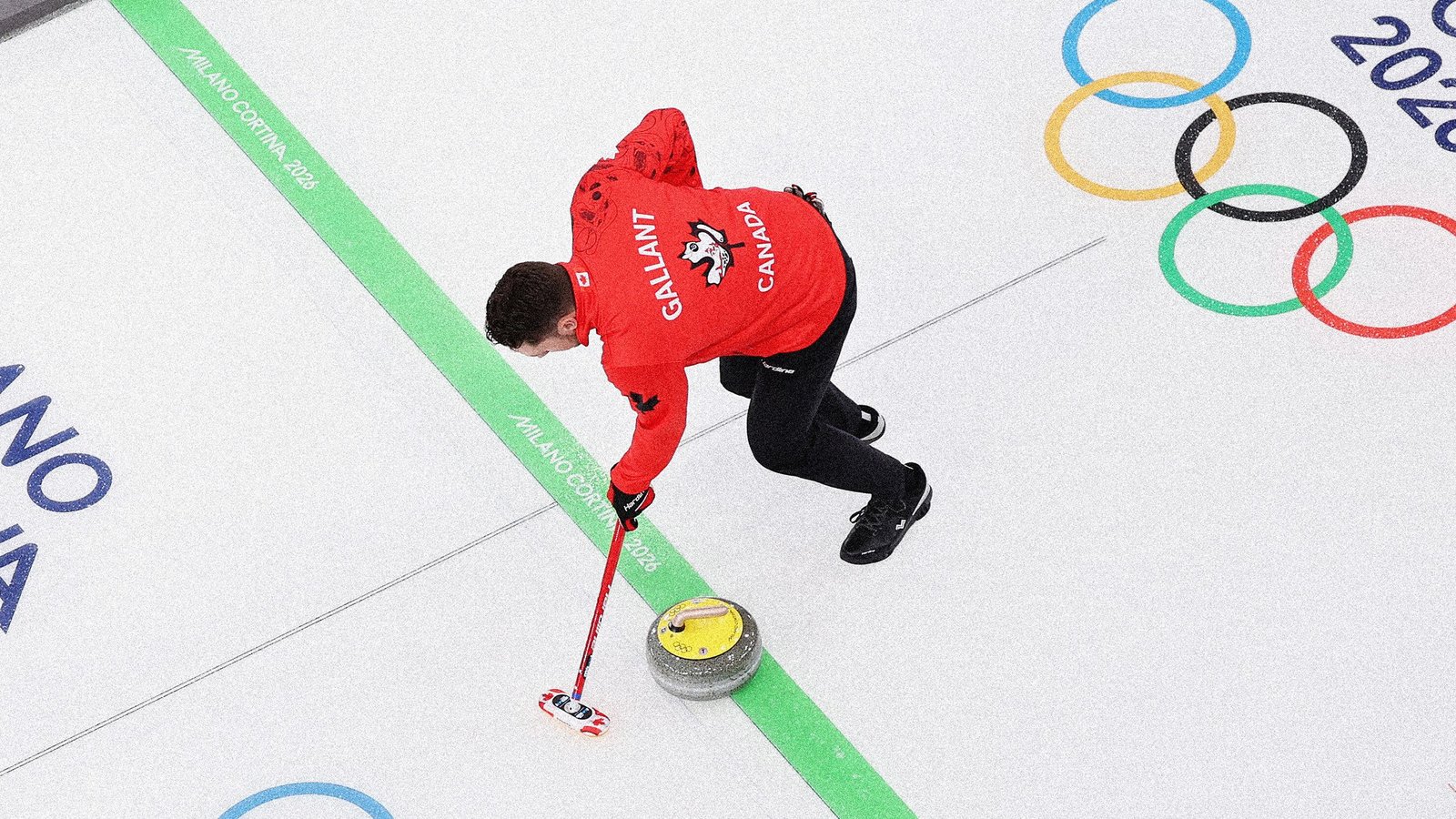
Modern curling has replaced these crude implements with highly regulated granite stones and complex strategic frameworks. Today, the “skip” or team leader orchestrates every move, dictating the strength and trajectory of each throw. Meanwhile, sweepers manipulate the ice surface in front of the moving stone, using friction to influence its distance and path—a delicate balance of physical exertion and tactical foresight.
The Olympic Ascent and Pop Culture Legacy
Curling made its initial Olympic appearance as a demonstration sport during the 1924 Chamonix Games, but it took over seven decades to secure permanent status. The sport officially joined the Olympic program at the 1998 Nagano Games, where nations like Scotland, Sweden, Switzerland, and Norway established themselves as the elite vanguard of the ice.
Outside the arena, curling has maintained a persistent presence in popular culture, appearing in The Beatles’ 1965 film Help! and the 1969 James Bond installment On Her Majesty’s Secret Service. This visibility, combined with the advent of 24-hour sports networks and digital recording in the early 2000s, transformed curling into a cult favorite. The sport’s rhythmic, hypnotic nature allows audiences to become immersed in its strategic depth, ensuring that every stone thrown in the upcoming 2026 Winter Games will be watched by a dedicated global audience.