Federal regulators, state attorneys general, and billion-dollar tech platforms are currently locked in a high-stakes legal war over the future of U.S. prediction markets as these “event contract” platforms pivot from niche financial experiments to mainstream cultural juggernauts. While industry leader Kalshi operates nationwide and rival Polymarket navigates complex regulatory restrictions, a surge in trading volume—highlighted by over $1.3 billion in Super Bowl-related contracts—has triggered a fierce jurisdictional clash between the Commodity Futures Trading Commission (CFTC) and state officials who categorize these trades as illegal gambling.
Mainstream Surge: From Niche Experiments to Billion-Dollar Giants
Prediction markets have rapidly transitioned into the financial mainstream, attracting massive capital from both casual speculators and institutional “sharps.” These platforms allow users to trade shares on real-world outcomes ranging from Academy Award winners to daily Bitcoin price fluctuations. The scale of this shift is most evident in sports; Kalshi recently reported a staggering $800 million in trades on Super Bowl Sunday alone. This explosion in activity has transformed the sector’s leading players into billion-dollar entities, fundamentally changing how the public interacts with forecasting and commodities trading.
Proponents, including Kalshi spokesperson Jack Such, argue that these markets democratize access to sophisticated trading tools. Unlike traditional casinos, prediction markets operate without a “house,” allowing users to trade directly against one another. Advocates maintain that this structure ensures fair pricing, provides the ability to exit positions at market value, and prevents the “limiting” or banning of successful traders—practices common in the regulated sportsbook industry.
A Jurisdictional Clash: Federal Oversight vs. State Gambling Laws
The core of the legal conflict centers on who holds the authority to regulate these instruments. The CFTC has overseen prediction markets since the 1980s, treating them as derivatives. However, state regulators are now aggressively challenging this federal dominance. Former New Jersey Attorney General Matt Platkin characterizes the industry as “unregulated, untaxed, and unsupervised” illegal gambling. This pushback is largely economic; states like Nevada have a vested interest in protecting the tax revenue generated by their own heavily regulated gambling sectors.
Kalshi currently faces 19 separate lawsuits across the United States. Federal lawmakers are also divided, with 23 Democratic senators recently urging prediction markets to comply with state-level gambling statutes. Despite this pressure, CFTC Chairman Michael Selig has signaled a combative stance. Following an amicus brief filed in support of Crypto.com’s dispute with Nevada regulators, Selig publicly vowed to defend federal authority against what he described as an “onslaught” of litigation.
Political Fault Lines and the “Trump Factor”
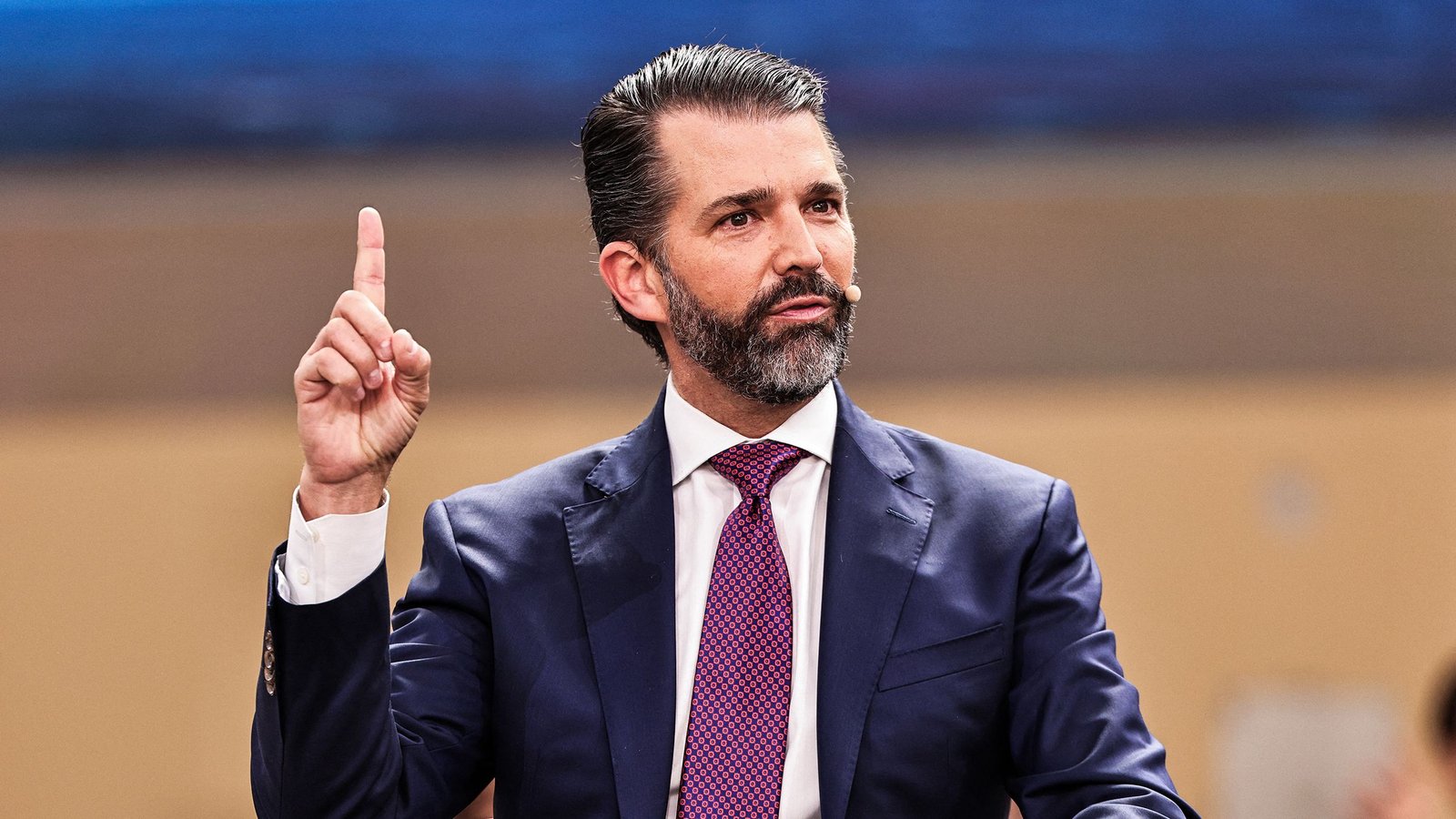
The debate over prediction markets does not follow traditional partisan lines. President Trump and his inner circle have signaled strong support for a light-touch regulatory approach. Donald Trump Jr. serves as an adviser to both Kalshi and Polymarket, while the Trump family plans to launch its own platform, Truth Predict. Conversely, some conservative figures, such as Utah Governor Spencer Cox and Senator John Boozman, have voiced sharp opposition, with Boozman likening the current landscape to the “Wild West.”
Meanwhile, the industry is bolstering its influence through strategic hires and lobbying. The Coalition for Prediction Markets, led by former Democratic Congressman Sean Patrick Maloney, argues that federal legislation from the 1930s grants the CFTC exclusive jurisdiction. Kalshi has also recruited former Biden administration official John Bivona to lead its government relations, illustrating the industry’s bipartisan effort to secure its legal standing.
Institutional Adoption and the Long Legal Horizon
Despite the regulatory turmoil, the industry continues to integrate into the global financial ecosystem. Polymarket recently secured a data integration deal with Substack, while Kalshi received a boost from a Federal Reserve report highlighting its efficacy as a forecasting tool. Major media outlets, including CNN, CNBC, and Dow Jones, have established data-sharing partnerships with these platforms, and quantitative giants like Jump Trading have taken significant equity stakes in the sector.
Legal experts draw parallels between this conflict and the rise of hemp-derived THC products, where federal loopholes and state prohibitions create a confusing, “capricious” regulatory patchwork. Just as the debate over intoxicating hemp products has dragged on for nearly a decade, observers expect the battle over prediction markets to be a marathon rather than a sprint. According to legal analyst Alex Grishman, the current wave of court cases in states like Nevada and Massachusetts will likely require years of deliberation in higher courts before a definitive national standard emerges.