
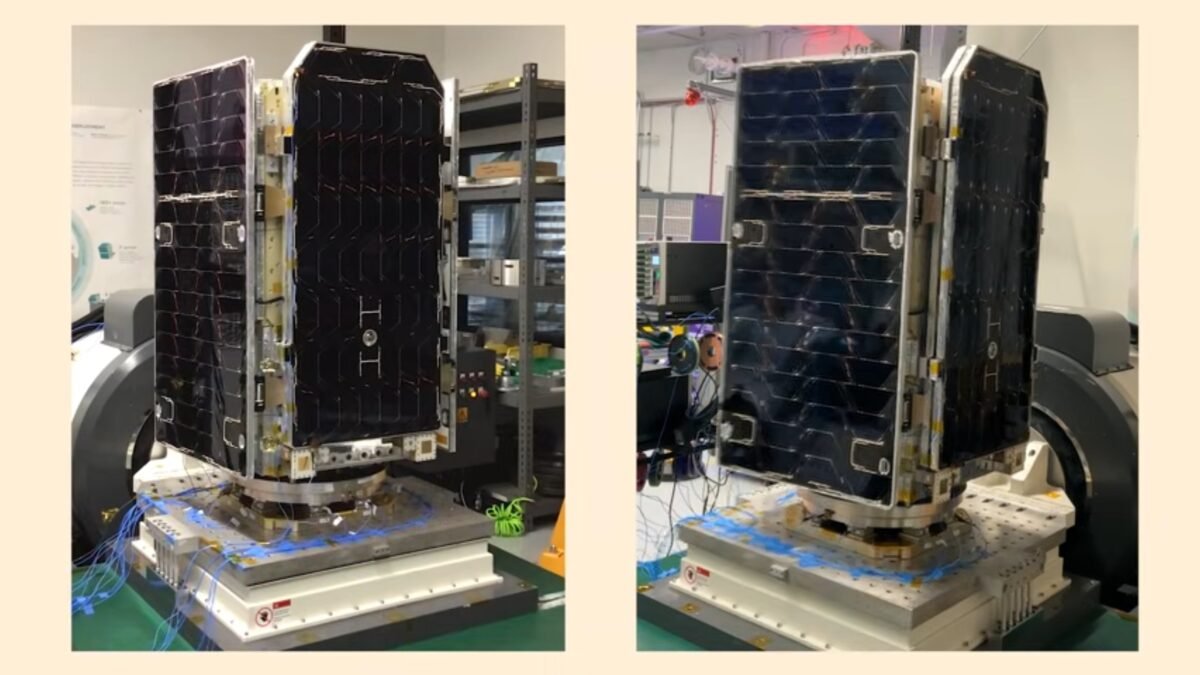
On October 1, Google is set to launch a test satellite aboard a SpaceX Transporter 18 rideshare flight. This mission aims to evaluate the satellite’s durability for performing basic AI tasks while in orbit.
While this initiative does not represent a full-fledged data center in space—a concept popularized by tech entrepreneurs like Elon Musk over the past year—it signifies a step towards that vision. The satellite, dubbed “MWP” and roughly the size of a refrigerator, is not designed for extensive medical research or high-volume data streaming. Instead, it will operate on low power, utilizing solar energy, to test AI computation capabilities in the space environment. This project is part of Google’s Project Suncatcher, developed in collaboration with the satellite imaging company Planet, which was announced late last year.
In a blog post featuring videos of the preparation work, Google’s research teams have ensured that Tensor Processing Units (TPUs), a type of AI chip, can endure the launch’s vibrations. The company describes this test as a preliminary step toward a long-term objective: “exploring whether space could one day host scalable machine learning infrastructure.”
Google CEO Sundar Pichai expressed his curiosity in a post on X, stating, “Can our TPUs survive and operate in space? Well, we’re going to find out.”
Can our TPUs survive and operate in space? Well, we’re going to find out.
Project Suncatcher is hitching a ride aboard @SpaceX‘s Transporter-18 mission, testing a prototype satellite built in partnership with @planet
One small step for TPUs…. pic.twitter.com/FuZoj7c0Hl
— Sundar Pichai (@sundarpichai) September 24, 2026
Harnessing Solar Power for AI in Space
Google detailed in its post that one motivation for processing AI data in space is energy efficiency. Satellites can harness eight times more solar power than their terrestrial counterparts, providing a significant energy resource for potential space data centers. This could alleviate the backlash against data centers on Earth.
Travis Beals, Google’s senior director for Paradigms of Intelligence, mentioned, “Eventually, it could be possible to link together multiple constellations of satellites, allowing them to manage larger AI workloads while in orbit.”
However, challenges remain. Google, SpaceX, and Nvidia are all exploring ways to extend their AI technologies beyond Earth, but they must contend with fundamental physical obstacles. Any satellite-based data centers must be resilient to radiation, extreme temperatures, and the stresses of launch. Additionally, they must navigate an increasingly crowded orbital space filled with other satellites and debris.
Google appears to be making rapid strides with Project Suncatcher, aiming for concrete advancements in the coming years, contingent on the success of the October test. A significant milestone planned for 2027 includes testing high-bandwidth laser communications after launching two additional AI satellites with Planet. Beals explained that communicating via lasers is more complex than it seems, requiring extraordinary precision akin to hitting a coin-sized target from a substantial distance while both entities are in motion.
A Potential Solution to Data Center Backlash?
The allure of space data centers lies in addressing substantial public opposition to new data center constructions. A public relations campaign by tech companies advocating for data centers may not suffice to quell the negative sentiment and protests surrounding data facilities that support data-intensive AI technologies.
Protests have erupted nationwide over concerns regarding energy consumption, water usage, pollution, and the potential effects on local communities. This could also influence voter sentiment in the upcoming midterm elections.
Establishing data centers in space could potentially circumvent local opposition. However, the financial implications are significant, and there is no assurance that the business model for space-based data centers will be viable for tech companies, according to Mahdi Eslamimehr, executive vice president at Quandary Peak Research.
“Demonstrating that chips function in orbit does not equate to proving a business model,” Eslamimehr cautioned. He added that this would not alleviate local electricity or water expenses anytime soon or replace existing data center projects, even if the concept of data in space proves feasible. “I welcome the experiments, but I expect that everyday AI services will still rely heavily on terrestrial infrastructures in 2027 and 2028,” he stated.
“A promise about 2035 does not pay an electricity bill in 2026,” he concluded.