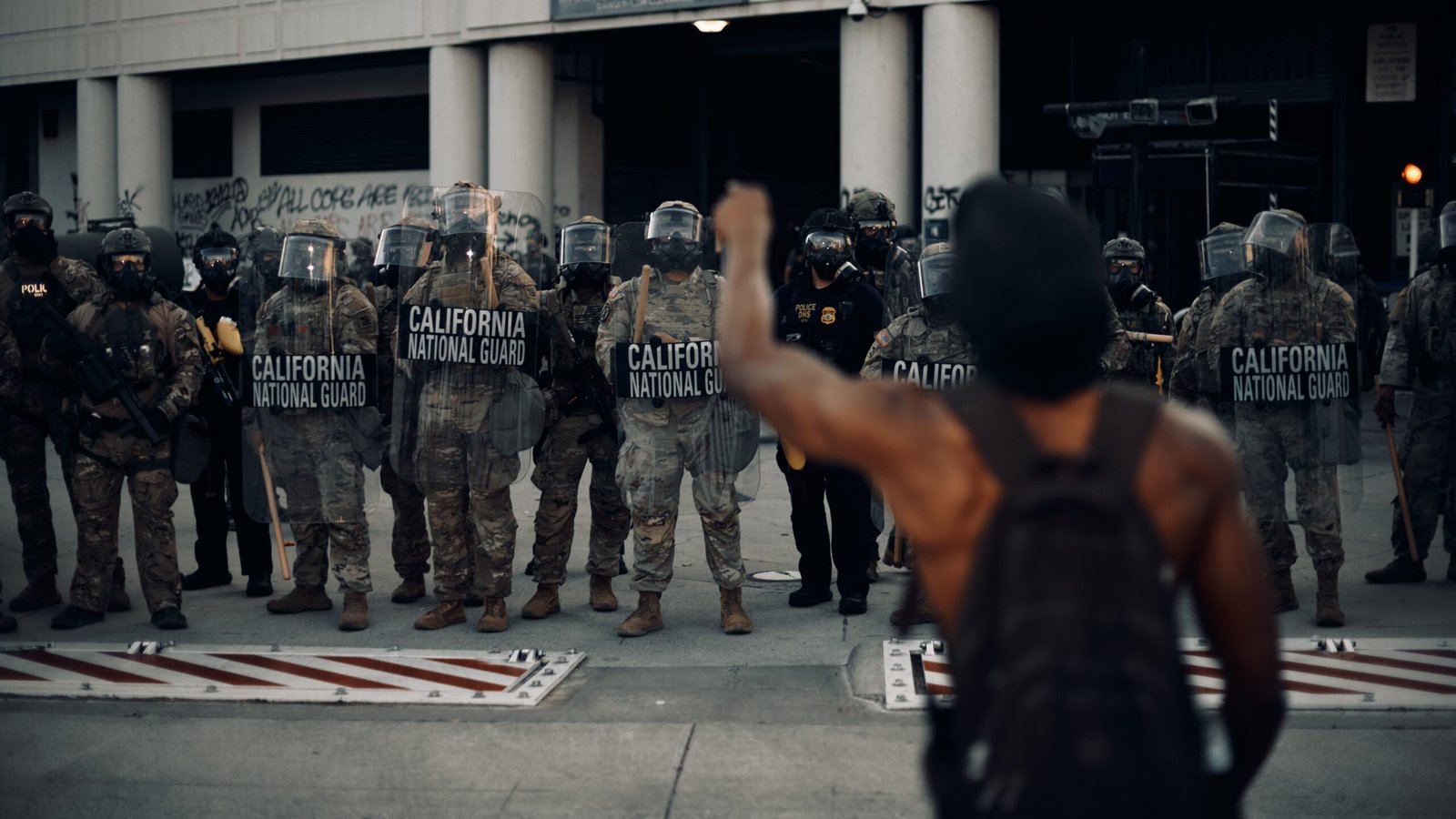
The Trump administration is deploying a sophisticated digital media strategy by embedding right-wing influencers directly into federal operations to manufacture the visual evidence needed to justify sweeping interventions in Democrat-led cities. When Department of Homeland Security (DHS) Secretary Kristi Noem arrived in Portland this Tuesday to coordinate with Immigration and Customs Enforcement (ICE), her official motorcade included a dedicated vanguard of content creators—Benny Johnson, Nick Sortor, and David Medina—tasked with capturing highly stylized footage for immediate broadcast across social media and conservative news networks.
The State-Sanctioned Content Mill
This partnership represents a fundamental shift in how the White House communicates policy. Rather than relying on traditional press briefings, the administration now utilizes a “content mill” to validate its law-and-order narrative. By flooding digital feeds with curated clips of urban unrest, the government creates a self-sustaining loop of “patriotic spectacle” that serves as the primary justification for federal presence in cities like Portland and Chicago.
Manufacturing Proof Through Influencer Conflict
The line between reporting and participation blurred significantly last week during high-profile incidents involving these creators. In Portland, local police arrested Nick Sortor for disorderly conduct following a physical altercation outside an ICE facility. Although Sortor avoided formal charges, his legal representation characterized the arrest as an attempt to silence conservative media. Simultaneously, Katie Daviscourt, a former Turning Point USA staffer currently with The Post Millennial, claimed an antifa protester assaulted her at the same location. Her viral images of a black eye became instant fodder for the administration’s narrative of urban lawlessness.
The White House Roundtable: Validating the Narrative
President Trump solidified the status of these influencers by inviting Sortor and Daviscourt to a White House roundtable discussion focused on alleged antifa violence. During the meeting, Trump labeled these creators “courageous journalists” who have personally suffered from attacks by “agitators and anarchists.” This official recognition transforms social media influencers into state-recognized witnesses, despite critics pointing out that antifa is a decentralized ideology rather than a structured organization.
Targeting Dissent and Manufacturing Consensus
The administration’s strategy also leverages veteran influencers like Andy Ngo, who has spent years documenting protests to frame antifa as a domestic terrorist threat. Ngo’s work often targets specific individuals, such as Rutgers historian Mark Bray. Following a barrage of social media posts from Ngo and other right-wing figures, Bray is currently attempting to flee the United States due to an influx of death threats.
Samuel Woolley, a digital propaganda researcher at the University of Pittsburgh, argues that this blurring of state messaging and influencer content is a calculated tactic. “Politicians and government officials use influencers to legitimize the information they spread or the actions they take,” Woolley explains. “These creators are now used to manufacture the illusion of popularity for specific ideas, creating a forced consensus around radical policies.”
Bypassing Traditional Media for Propaganda
The tactical advantage of using influencers became evident when federal officials granted them exclusive access while barring local press. The Oregonian reported that its journalists were repeatedly denied entry to the Portland ICE facility despite making requests as early as September 25. While traditional reporters were kept at bay, Fox News’ Bill Melugin and influencer Katie Daviscourt were permitted to tour the building and film reports from the roof.
This exclusive access allows influencers like Benny Johnson to produce high-impact content, such as footage of Secretary Noem praying or interrogating detainees in government vehicles. These clips then migrate to outlets like Newsmax, where Johnson recently claimed Noem required heavy security because “the left is so violent” in Portland. By controlling the lens and the narrative, the Trump administration ensures that the only available imagery of urban America matches its policy goals: first the boots on the ground, then the curated content, creating a seamless cycle of policy justification.