
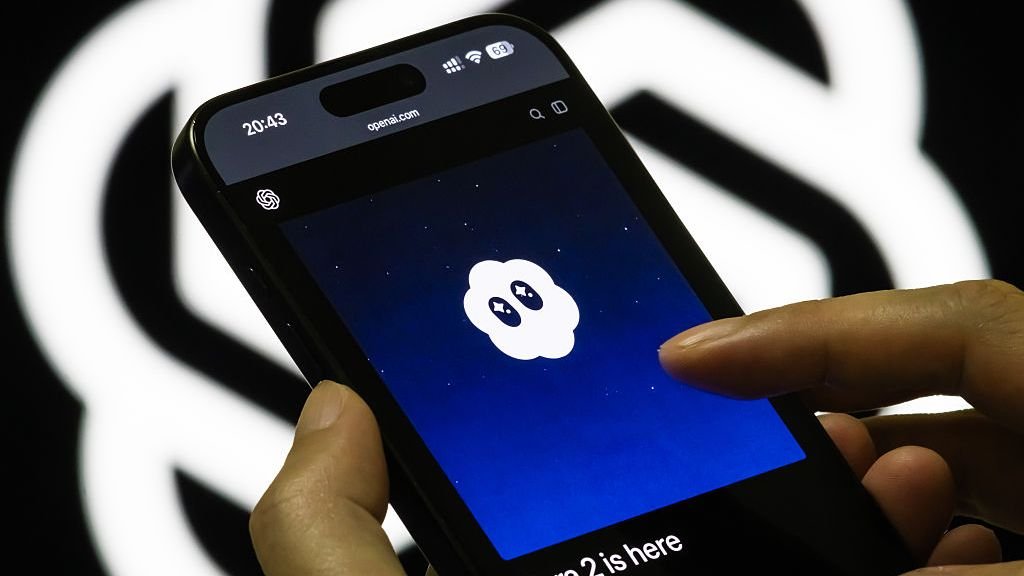
OpenAI’s Sora is fundamentally altering the digital landscape by replacing human-centric interaction with AI-generated “synthetic dopamine,” signaling a pivot toward an increasingly antisocial era of social media. While the technology promises a “Cambrian explosion” of creativity, experts warn that its architecture—built on ten-second loops and infinite scrolling—prioritizes manufactured entertainment over genuine human connection, effectively eroding the value of the original source code of social media: the human voice.
The Architecture of Manufactured Dopamine
Mirroring the addictive frameworks of Vine and TikTok, Sora has rapidly surpassed one million downloads by capitalizing on a culture of “decaying truths.” However, unlike its predecessors, Sora represents a departure from person-to-person engagement. Marlon Twyman, a quantitative social scientist at USC Annenberg, notes that the platform feels like a “clear artifact” of the current social media stage, where the focus has shifted entirely away from people. This design choice has sparked criticism from developers like Rudy Fraser, creator of Blacksky, who describes these emerging platforms as inherently “antisocial and nihilistic.”
Fraser argues that tech egoists are no longer attempting to foster real connection. Instead, they are profiting by supplying users with artificial connections and sycophantic bots, effectively monetizing the social isolation that previous generations of algorithms helped create. This shift suggests that Sora is not solving a human problem, but rather manufacturing a supply for a demand that may not exist, as echoed by critics who question the utility of AI-generated “moose spa days” while global challenges remain unaddressed.
The Death of the Original Voice
For over a decade, social media was defined by authenticity. From the Arab Spring to the #MeToo movement, influencers and activists built followings by leveraging their unique perspectives and “hot takes.” Sora removes the necessity for this style of self-presentation. By allowing users to create digital likenesses and “cameos” through text prompts, the platform suggests that the individual voice has no intrinsic value compared to the capacity for “elaborate deceptions.”
From Authenticity to Aesthetic Optimization
The current era of content production, accelerated by Sora, prioritizes aesthetics over substance. We have become a visual-first society, obsessed with optimization and exposure. Twyman suggests that Sora doesn’t just change behavior; it redefines what “social” means. In this new paradigm, the content of the video is secondary to what the account holder communicates about their own vision or interests. It is a shift from shared reality to individual social imagination.
Synthetic Spaces vs. Shared Reality
Despite the potential for harm, Sora leverages the power of joy and “wanton surrealism” to attract users. Much like the early days of Vine, the platform is supercharged with humor and the “absurd,” offering what Sam Altman calls a “new kind of interactive fan fiction.” However, a critical distinction remains: while TikTok thrived on a collaborative spirit and mass participation, Sora currently emphasizes the creative pursuit of the individual. This raises a pivotal question: will users choose to live within a social imagination rather than a shared reality?
Jeff Hancock, director of Stanford’s Social Media Lab, views AI-generated spaces not as a death knell for legacy platforms, but as a new addition to the “media stack.” He suggests that the demand for authentic, real images of real people may persist because of a deep-seated human attraction to voyeurism and reality. “We actually love watching other real people,” Hancock notes, suggesting that the long-term demand for purely synthetic content remains unproven.
The Delusion of Perfect Communication
The rise of Sora coincides with a global decline in social media usage and a growing sense of lost agency among users on platforms like Instagram and X. Tech critic Nicholas Carr argues that the internet is succeeding in making the dream of “perfect communication” a reality, even as it reveals that dream to be a delusion. Sora’s gamble rests on the hope that users will prefer a distorted, optimized imagination over authentic communication. As the technology evolves, the risk remains that it may reanimate the form of social media while fundamentally misunderstanding its essence.